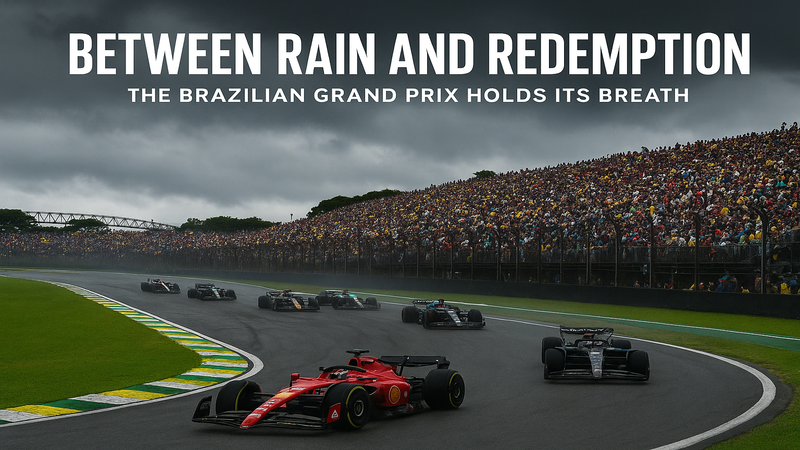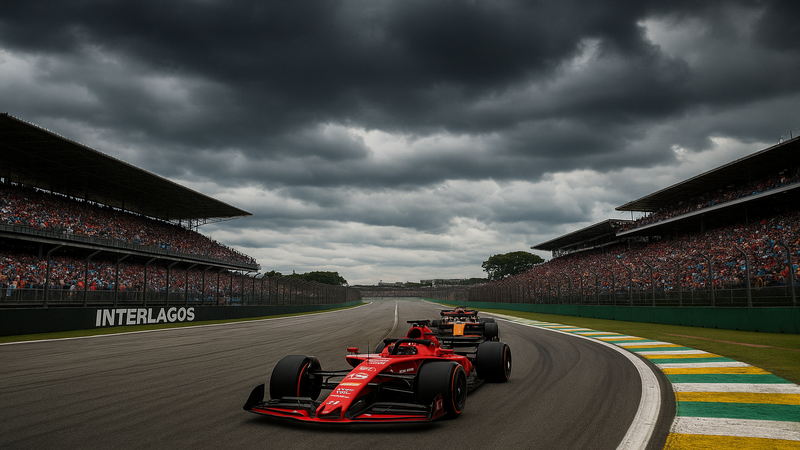
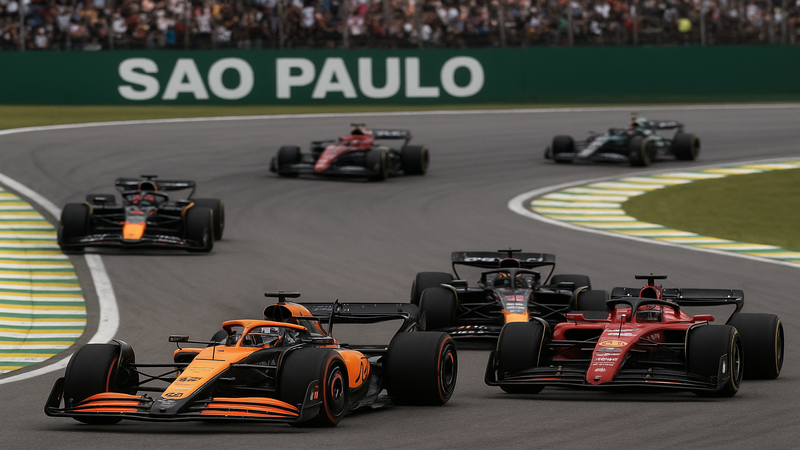
As the sun rose over São Paulo on the morning of November 7, 2025, anticipation rippled through the paddock at Interlagos. The Sprint Race of the Brazilian Grand Prix promised a fierce and unpredictable battle at one of Formula 1’s most dynamic circuits — the Autódromo José Carlos Pace. The event, held just 24 hours before the main race, would span 24 laps around the 4.3-kilometer track, testing the limits of both machinery and driver focus. With its anti-clockwise configuration, steep elevation shifts, and iconic corners like the Senna S and Descida do Lago, Interlagos remains a proving ground where even minor errors carry heavy consequences. The Sprint was set for an 11:00 a.m. local start, a time chosen to avoid the afternoon heat that can push track temperatures above 45°C — a crucial factor for teams managing tyre life and car balance in the short yet intense sprint format.
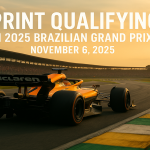
Heading into the race, all twenty regular drivers were cleared to participate, though several teams arrived at the starting grid after a frantic night of repairs. Oscar Piastri’s heavy crash in the Sprint Qualifying session left McLaren mechanics with a race against time to replace damaged components, including the front suspension and underfloor assembly. Red Bull also endured a busy night in the garage after Yuki Tsunoda clipped the barrier late in qualifying, forcing the team to rebuild the rear wing assembly on his RB21. Despite these challenges, no reserve drivers were called in — a relief for fans eager to see a full grid. Ferrari, however, voiced concerns about Charles Leclerc’s power unit after telemetry showed an irregular fuel-flow reading during qualifying. The team confirmed that a secondary system inspection was underway, though Leclerc was expected to start the sprint without penalties.
From a tactical standpoint, Sprint Race day required a precise balance between aggression and restraint. Unlike the main Grand Prix, pit stops are rare, so tyre management over 24 laps becomes paramount. Most teams prepared to start on the medium compound, favoring its resilience on Interlagos’ abrasive surface, while McLaren considered gambling on soft tyres to maximize early grip. Red Bull, meanwhile, focused on energy recovery calibration — particularly through Turns 10 to 12 — to extract more power on the long uphill drag to the finish line. Mercedes engineers were seen running late-morning simulations, testing a rear-wing adjustment to boost straight-line speed without compromising traction. The limited practice data from the day before meant engineers relied heavily on historical telemetry from previous years. Every decision — from tyre pressure to brake duct size — carried greater risk under sprint conditions, where there’s no room to recover from a setup mistake.
The press build-up on Friday night and early Saturday morning captured the growing tension in the paddock. Brazilian outlets like Globo Esporte hailed the return of a packed grandstand, noting how local fans cheered for young rookie Gabriel Bortoleto, who was making his debut sprint start in front of his home crowd. International reporters focused on McLaren’s continued rise, pointing to Lando Norris’s form as evidence that Red Bull’s once-iron grip on the sport was loosening. Headlines questioned whether Verstappen could strike back after an uncharacteristically scrappy qualifying run that left him starting from the second row. Pundits also highlighted the threat of changing conditions — São Paulo’s weather radar showed a 40% chance of light rain mid-race. Journalists predicted chaos if drizzle hit, as Interlagos’ mix of old and new asphalt makes grip levels unpredictable. There was also strong media attention on Mercedes’ quiet progress; while they had not shown front-running pace in qualifying, insiders suggested the team was hiding race-focused performance under higher fuel loads.
Inside the television studios, analysts dissected every strategic angle in the hours before lights out. Former drivers emphasized that the sprint format would reward boldness — particularly at the start, where Turn 1 typically invites three-wide battles. They predicted a potential clash between Norris and Verstappen if either tried to assert early dominance into the Senna S. Technical commentators highlighted how McLaren’s strong traction through low-speed corners could give them the upper hand in the opening laps, though their softer-tyre choice might fade late in the race. Others suggested Ferrari’s medium-tyre approach could pay dividends if grip levels fell off quickly. Analysts also discussed mental resilience: Piastri’s crash the day before left questions about his confidence, while Sergio Pérez’s recent string of underwhelming results added pressure for a rebound. As the countdown to lights-out began, the consensus in the studio was clear — the 2025 Brazilian Sprint wasn’t just a prelude to Sunday’s Grand Prix, but a decisive battleground in its own right. Every lap at Interlagos would demand precision, courage, and adaptability — traits that have defined champions for generations.
| Read a Related Article |
|---|
Pressure Builds in São Paulo: McLaren Leads the Charge as Sprint Qualifying Unfolds