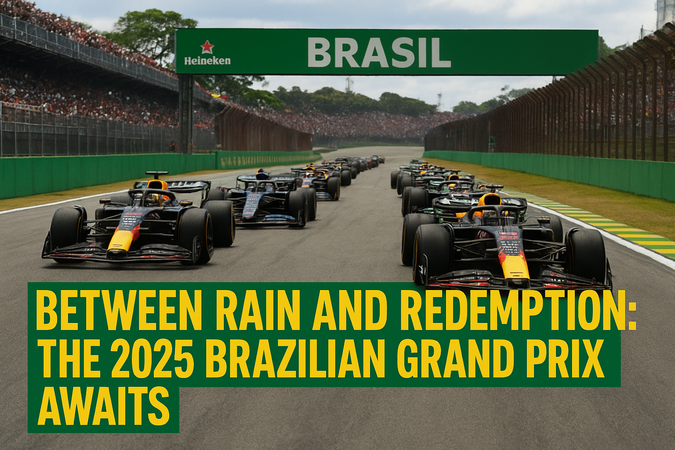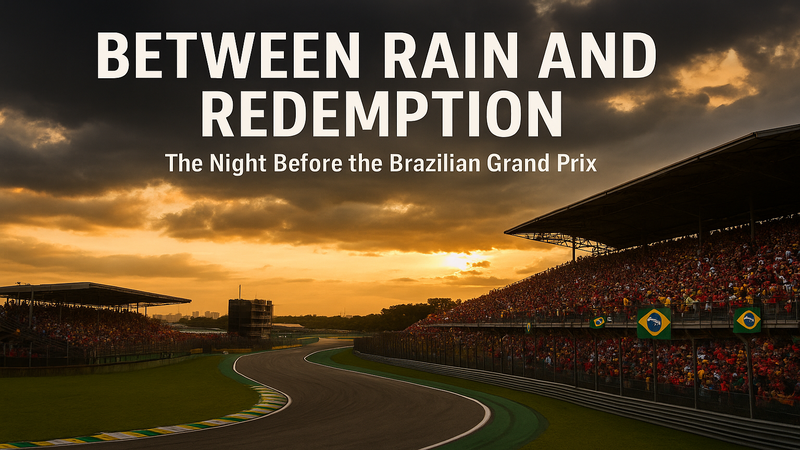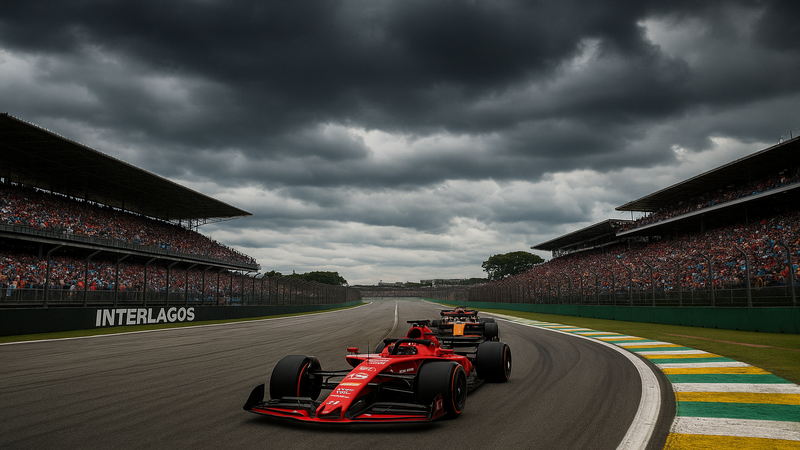
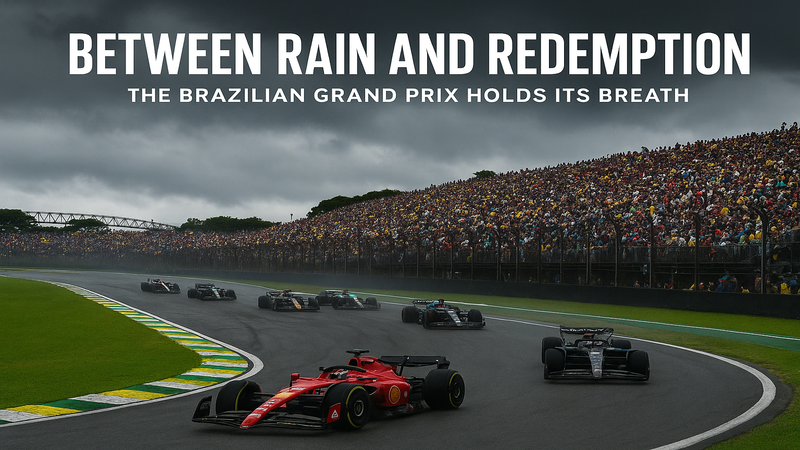
The morning sky above São Paulo hung heavy with humidity on November 8, 2025, as the paddock stirred to life ahead of the Brazilian Grand Prix — one of Formula 1’s most iconic races and a pivotal moment in the 2025 championship. The Autódromo José Carlos Pace, better known as Interlagos, was already alive with sound and colour as fans filled every corner of the grandstands. Set across 71 laps and 305.9 kilometres, the circuit’s 4.309 km layout would once again push drivers to their limits, combining rapid elevation changes, tight corners, and two crucial DRS zones that make overtaking both possible and perilous. The race was scheduled for 3 p.m. local time, with air temperatures hovering near 28°C and track conditions alternating between dry and damp — the kind of unpredictability that defines Interlagos. It was, in every sense, a day set for both chaos and brilliance, the kind of Sunday that can rewrite an entire season.
Inside the garages, engineers and strategists faced a relentless checklist of final preparations. Mechanics were seen fine-tuning suspension setups, ensuring brake ducts were properly cooled and tyres were pre-heated for the challenging opening laps. There were no confirmed driver withdrawals, but overnight inspections revealed some lingering scars from Saturday’s sprint and qualifying sessions. McLaren spent hours reinforcing Oscar Piastri’s floor after debris damage, while Ferrari’s crew worked intensely on Charles Leclerc’s gearbox calibration following a slight downshift irregularity in the Sprint. Red Bull’s pit area, as always, radiated calm precision — though whispers in the paddock suggested a late-night review of Max Verstappen’s rear-wing assembly after vibration data raised concerns. Mercedes reported both drivers fit and confident, but still tinkered with brake bias and ride-height in search of better balance on the notoriously bumpy surface. Every millimetre mattered; at Interlagos, even the smallest setup decision could become the difference between victory and heartbreak.
Strategically, the race posed a formidable puzzle. Pirelli brought the C2 (hard), C3 (medium), and C4 (soft) compounds, and most teams leaned toward starting on the yellow-banded mediums to maximise flexibility for a potential one-stop race. However, the unpredictable São Paulo weather loomed large — radar models hinted at a 40 percent chance of showers drifting in from the south midway through the event. Teams rehearsed scenarios where a sudden safety car or rain shower could completely reset their strategy. Red Bull’s engineers, known for precision timing, were reportedly prepared for a medium-to-hard sequence, betting on Verstappen’s pace in clean air. McLaren, on the other hand, considered an early undercut to control track position for Lando Norris, who entered the race leading the championship by a slim margin. Ferrari debated a split approach between Leclerc and Sainz — one car on an aggressive two-stop, the other on endurance tyres to cover both scenarios. Mercedes was the wildcard: their long-run pace on Friday looked strong, hinting that if the front-runners tripped over each other, they might quietly steal the spotlight.
Across media outlets, anticipation reached fever pitch. Brazilian newspapers filled their front pages with images of packed grandstands, celebrating São Paulo’s enduring passion for Formula 1 and the possibility of rain — the great equaliser that has made this Grand Prix a theatre of the unexpected for decades. International journalists drew battle lines between Norris and Verstappen, with headlines such as “Calm versus Chaos” and “Norris Under Siege in Brazil.” Analysts highlighted that McLaren’s high-downforce setup, ideal for the twisty middle sector, could prove vulnerable on the long front straight, making the defence into Turn 1 a major tactical concern. Meanwhile, Red Bull’s recent updates to their floor and diffuser had reportedly narrowed their deficit in cornering performance, setting up a mouth-watering clash of styles. Ferrari, too, earned praise for showing improved tyre consistency — a factor that could make Leclerc a genuine contender if strategy fell his way. The atmosphere around Interlagos carried the scent of inevitability — something big was going to happen.
Inside the broadcast studios, the mood was analytical but charged with energy. Former drivers and pundits dissected telemetry data, tyre degradation models, and overtaking projections with near-surgical precision. Some commentators argued that Verstappen’s aggressive approach in mixed conditions gave him the psychological edge; others pointed to Norris’s smooth, mistake-free driving as the mark of a champion in the making. Technical experts explained that the bumps at Turns 6 and 7 could unsettle even the best cars, putting immense pressure on suspension control and traction mapping. Every team’s race engineer, it seemed, had a different version of the same headache: balance raw speed with tyre longevity in conditions that could change lap by lap. In the closing moments before the grid formed, cameras captured drivers staring straight ahead in their cockpits — silent, composed, and calculating. The Brazilian Grand Prix has never been about who starts fastest; it’s about who adapts first when the track, the weather, and fate itself conspire to test every ounce of skill.
And so, as the engines began to growl beneath a swirling sky, the tension became almost physical. The crowd roared, the lights flickered, and São Paulo’s hills seemed to vibrate with anticipation. The 2025 Brazilian Grand Prix was about to begin — a race that promised drama, strategy, and possibly the moment that would define the season.
| Read a Related Article |
|---|
Showdown at Interlagos: The 2025 Brazilian Grand Prix Set for a Championship Decider