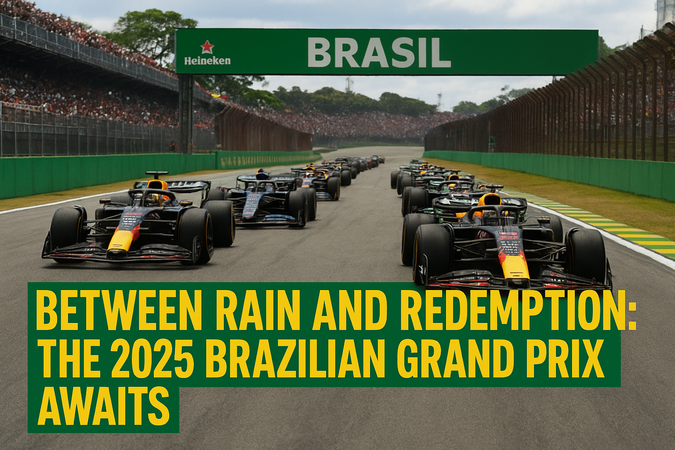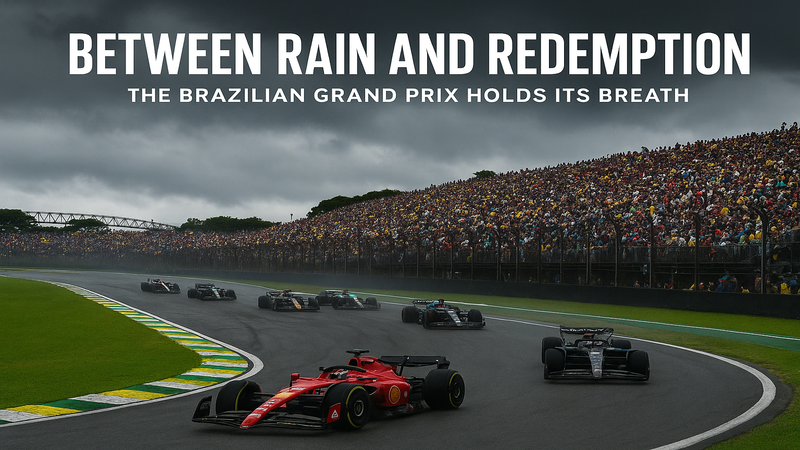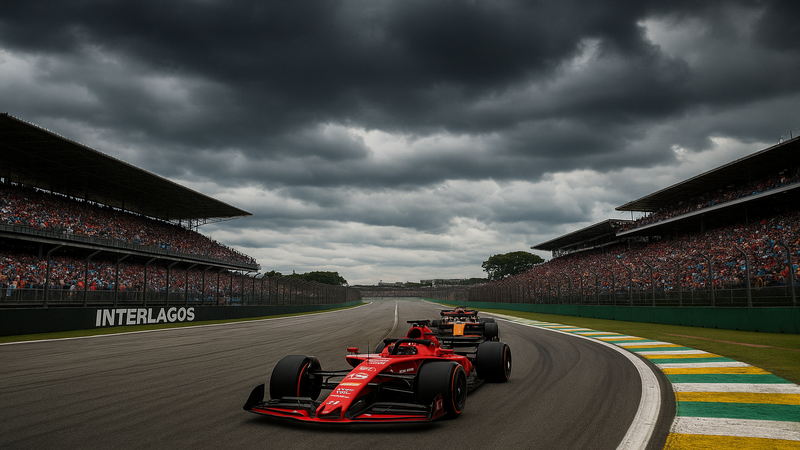
The sun rose slowly over the city of São Paulo on November 8, 2025, as Formula 1 prepared for one of the most iconic and unpredictable races of the season — the Brazilian Grand Prix. The Autódromo José Carlos Pace, or Interlagos as it is fondly known, was already buzzing with excitement long before the lights would go out. The 4.309-kilometre circuit, nestled in the heart of the Interlagos neighbourhood, has always been a theatre of chaos and glory — a track where history has been written in both rain and sunshine. With 71 laps ahead and temperatures expected to hover around 27°C, conditions were set to be mild but challenging, especially with clouds lingering on the horizon. This year’s Grand Prix would take place under the Sprint format, meaning teams entered Sunday’s race with limited practice data and little margin for error. Engineers knew that the bumpy surface, high elevation changes, and anti-clockwise layout would test both man and machine to their limits.
Inside the paddock, the tension was palpable as teams worked through the final stages of preparation. No drivers were ruled out of the race, but several cars required late-night attention after Saturday’s sprint and qualifying battles. McLaren’s crew worked meticulously on Oscar Piastri’s car after minor floor damage was detected, while Red Bull engineers made final adjustments to Max Verstappen’s rear suspension setup following vibrations discovered in telemetry. Ferrari’s garage was a hive of activity as Charles Leclerc’s team addressed gearbox calibration issues that surfaced late on Saturday evening. Mercedes, meanwhile, focused on optimizing tyre temperatures, struggling to find the perfect balance between rear grip and front-end bite. There were no official driver substitutions, but reserve drivers like Felipe Drugovich (Aston Martin) and Liam Lawson (Red Bull) remained on standby should the unexpected occur. The compressed weekend schedule left no time for complacency; any overlooked issue, however small, could transform a contender into a casualty once the race began.
Strategically, Sunday’s race was expected to hinge on tyre management, track evolution, and weather intervention. Pirelli supplied the C2 (hard), C3 (medium), and C4 (soft) compounds, and teams were divided in their approach. The majority planned to start on the medium tyres, hoping to maintain flexibility for a one-stop strategy, but some — notably Red Bull and Ferrari — were quietly considering aggressive two-stop approaches, particularly if rain or a safety car compressed the field. The Senna S and the uphill run to Turn 1 loomed as the race’s first major flashpoint, with drivers targeting the inside line for maximum traction. Engineers debated aerodynamic setups deep into the night: McLaren favoured higher downforce for cornering stability in sector two, while Red Bull leaned toward lower drag for better straight-line speed on the main straight. Interlagos’ unpredictable surface made grip evolution difficult to model — a factor that could reward those who managed tyre degradation intelligently in the final 15 laps. Pit stops were projected between laps 25 and 35, but the risk of rain could blow that script apart.
The global media coverage leading into race day reflected both awe and anxiety. Brazilian publications celebrated the electric atmosphere at Interlagos, where over 100,000 fans filled the stands with flags, chants, and smoke flares in the national colours. Local pride was high as São Paulo prepared to host another dramatic finale — the circuit that once crowned legends like Ayrton Senna, Lewis Hamilton, and Kimi Räikkönen was ready to write a new chapter. Internationally, attention centred on the title fight between Lando Norris and Max Verstappen. Norris entered Sunday’s race as championship leader but under immense pressure to maintain consistency after Verstappen’s dominant sprint performance. Headlines debated whether McLaren’s strategy team could withstand the relentless tactical aggression of Red Bull, while Ferrari was positioned as the dark horse — fast, stable, and quietly confident. Journalists also pointed out Mercedes’ long-run pace, hinting that the team might not be out of contention if chaos struck up front. The buzz in the press room was unanimous: Interlagos would not be kind to the complacent.