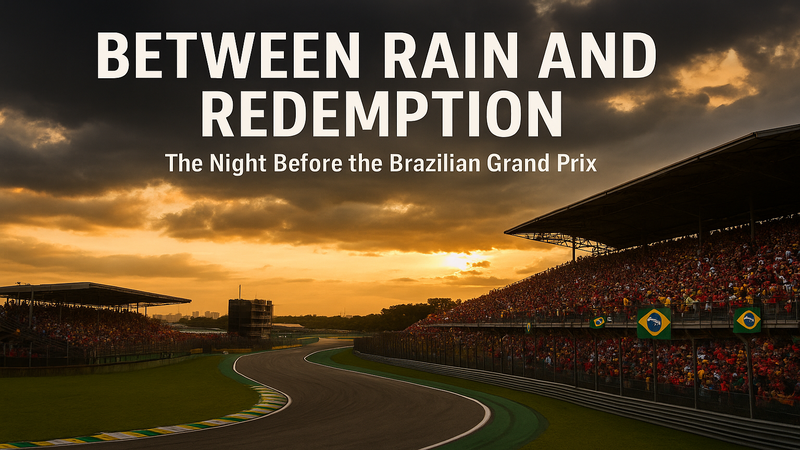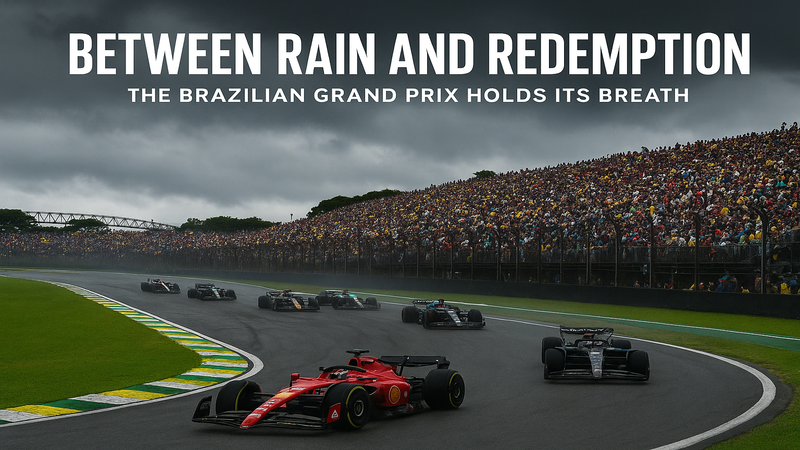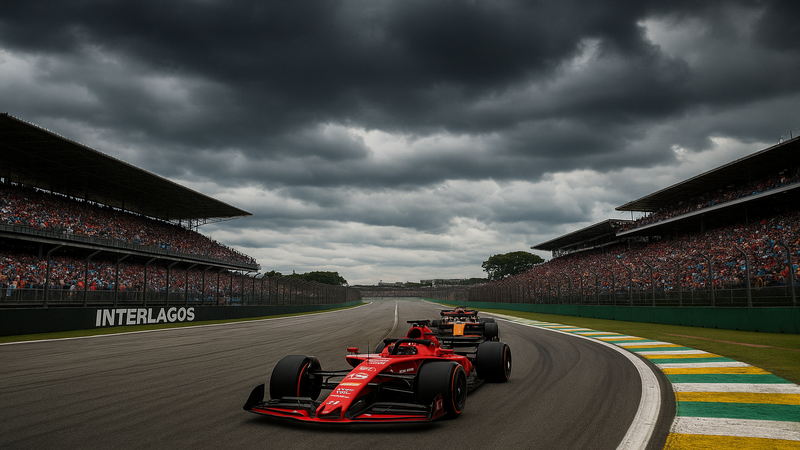
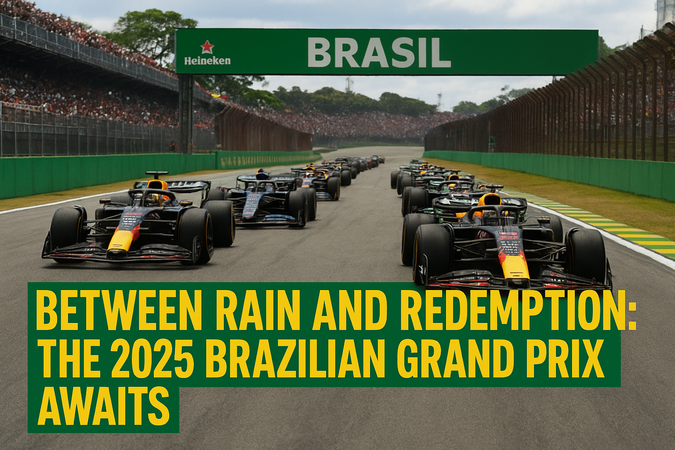
The air in São Paulo was thick with anticipation on the morning of November 8, 2025, as thousands of fans streamed into the Autódromo José Carlos Pace for what promised to be a defining moment in the Formula 1 season — the Brazilian Grand Prix. The circuit, nestled among the rolling hills of Interlagos, stood shimmering under a mixture of sun and cloud, its 4.309-kilometre layout ready to challenge even the most seasoned drivers. The race, scheduled for 3 p.m. local time, would span 71 laps of pure intensity, a test of endurance and precision around one of F1’s most characterful tracks. Interlagos is known for its sudden weather swings, steep gradients, and flowing rhythm that links corners like a dance — one mistake in the Senna S or a poor exit onto the back straight could spell disaster. Teams knew that weather would again play a crucial role, with light rain forecast for the late afternoon potentially throwing every carefully planned strategy into disarray.
Every driver was cleared to race, though several garages were unusually busy the night before as teams repaired and recalibrated after a bruising Sprint day. Oscar Piastri’s McLaren required substantial underbody work following contact with debris in the Sprint, while Ferrari’s Charles Leclerc reported gearbox sensitivity that had the Scuderia on high alert. Red Bull mechanics worked deep into the evening inspecting Max Verstappen’s floor after it was scraped during qualifying — a small issue, but at this level, even a millimetre of aerodynamic imbalance can change a lap. Mercedes faced its own technical puzzle, fine-tuning brake cooling to cope with expected temperature fluctuations. No reserve drivers were called upon, but several teams quietly acknowledged that their cars were operating closer to mechanical limits than ideal. Despite this, spirits were high across the paddock. Interlagos, more than any other circuit, has a way of turning adversity into opportunity — a place where chaos often rewards the bold.
Strategically, the 2025 Brazilian Grand Prix demanded a delicate balance between aggression and restraint. Engineers across the pit lane were split over the best opening tyre compound. Most were expected to start on the yellow-marked mediums to withstand the long first stint, though Pirelli’s soft tyre tempted those hoping for early track position. The first corner, the iconic Senna S, loomed as a tactical focal point: the long uphill drag from the grid to Turn 1 means slipstreaming and clutch release can define an entire race. Teams prepared varied downforce settings — McLaren and Ferrari favouring high grip through sector two’s twisting corners, while Red Bull and Mercedes leaned toward a more slippery setup to maximize top speed on the straight. Fuel load and pit window predictions were tighter than usual, as the combination of potential rain and track evolution could flip the race midstream. A two-stop strategy was being modeled by several teams as insurance against tyre graining, especially if track temperatures fell below 30°C during the second half of the race.
The global media buzzed in the hours before lights out, framing the São Paulo race as one of the championship’s decisive chapters. Local outlets celebrated the electric atmosphere, spotlighting the return of a fully packed grandstand and the pride surrounding Brazilian reserve driver Felipe Drugovich, who joined Aston Martin as standby. International journalists focused on the renewed rivalry at the top: Lando Norris, now leading the championship by a narrow margin, was under immense scrutiny to defend his position against Verstappen’s expected fightback. Headlines questioned whether McLaren could sustain its precision under race pressure or if Red Bull’s race-day mastery would swing momentum back their way. Ferrari’s quiet resurgence also drew attention, with analysts noting Leclerc’s consistent pace in the middle sector. Meanwhile, the weather narrative dominated the pre-race headlines — meteorologists warned that scattered showers around 4 p.m. could alter grip conditions dramatically, echoing classic Brazilian Grands Prix where chaos rewrote the script.
In television studios around the world, analysts and former drivers broke down the tactical layers with precision. Many highlighted that the Interlagos circuit, though short, compresses the field and demands relentless focus — even minor mistakes through Turn 10 or the tricky Bico de Pato can undo an entire strategy. Commentators debated tyre wear predictions, suggesting that McLaren’s higher-downforce configuration could give them stability in the middle sector but at the cost of straight-line defence. Red Bull’s decision to run a lower rear wing was praised as a bold move, potentially vital for overtaking along the pit straight. Others drew attention to the mental element — Verstappen’s ability to recover from setbacks versus Norris’s calm composure under pressure. Pundits also pointed to Mercedes’ quiet threat: both drivers had long-run pace that suggested they could pounce if the leaders faltered. The general consensus was clear — this was not merely another race in the calendar, but a potential turning point in a season defined by precision, unpredictability, and human resilience.
As engines began to warm and mechanics cleared the grid, a familiar tension filled the air. The wind shifted, the crowd roared, and every team knew that once the lights went out, there would be no second chances. The Brazilian Grand Prix of 2025 was about to unfold — a spectacle where history, risk, and determination would collide on the sunlit tarmac of Interlagos.
| Read a Related Article |
|---|
ngineering the Edge: Breaking Down the Strategy Behind Brazil’s Qualifying Session